
Cost of Living in Dallas 2025: Housing & More
Cost of Living, Dallas 2025, Housing, Utilities, Groceries, PJ Zaji
The True Cost of Living in Dallas in 2025: Housing, Utilities, Groceries, and More
Thinking about making a move to Dallas in 2025—or wondering if you should stay put? You cannot afford to guess at the real numbers. The headlines are noisy, the opinions are louder, and yet your decision comes down to one simple question: What will it actually cost me to live in Dallas?
Dallas in 2025: Not Cheap, Not Out of Reach—But You Need the Truth
Let’s cut through the fluff. In 2025, Dallas is not a bargain-basement city, but it is not San Francisco or New York either. Most data puts the overall cost of living in Dallas hovering right around the U.S. average—roughly between 1.5% below and 0.2% above depending on the source. In plain English: your dollar here stretches about as far as it does in an average American city, but where you choose to live and how you live makes or breaks your budget.
Inflation in 2025 stayed relatively tame in Dallas–Fort Worth. The local Consumer Price Index nudged up around 1% year over year, with food up about 1.6–2.9% and energy up about 2% according to the Bureau of Labor Statistics and the Dallas Fed. That sounds mild—until you put numbers to it and realize how quickly “just a couple of percent” hits your monthly cash flow when housing, groceries, utilities, transportation, and healthcare all move at once.
📌 Key Takeaway: Dallas is no longer the “super cheap big city” people remember from a decade ago. It is now a numbers game, and if you do not know your numbers, you are playing blind.
Housing in Dallas in 2025: Your Biggest Line Item, Your Biggest Lever
If you are serious about moving to or within Dallas, start where the math hits hardest: housing. Whether you rent or buy, this is the category that will decide if Dallas feels affordable or suffocating. And in 2025, the housing story in Dallas is bold, complicated, and full of opportunity for people who understand the details.
Renting in Dallas: Stable Prices, Tight Affordability
Let’s talk rent. In mid‑2025, the average rent in Dallas sat around $1,570 per month, compared to a national average near $1,900. That sounds like a win—until you realize what it takes to comfortably carry that payment. A 2025 analysis estimated that the average Dallas renter household needed to earn about $71,413 per year to keep housing at or below 30% of income. That is the classic affordability threshold, and too many households are blowing right past it.
Out of roughly 304,000 renter households in Dallas, about 59% are low income, and half are cost-burdened—meaning they are spending more than 30% of their income on rent. That is not a fringe problem. That is the middle of the market feeling the squeeze. If you are payment-conscious, you cannot just “hope it works out.” You need a strategy: neighborhood choice, roommate or no roommate, and whether it is time to stop renting altogether and buy something that locks in your payment instead of chasing annual increases.
💡 Pro Tip: If your rent is already above 30% of your gross income, it is time to run the numbers on buying—not someday, now. You may be closer than you think once you factor in taxes, insurance, and realistic down payment options.
Buying in Dallas: Cooling Prices, Powerful Opportunities
On the purchase side, 2025 was a pivot year. The Dallas city median home price hovered around $410,000 for the year, with a surge to about $535,000 mid‑year and a slide back toward the mid‑$470,000s by December, according to HAR and Opendoor data. Meanwhile, across the broader DFW metro, median prices actually dropped around 5.3%, and Dallas County saw about a 1.4% decline. In other words, the market finally stopped sprinting and started catching its breath.
That does not mean homes are cheap. It means the chaos cooled. Sellers in many pockets lost some of their pricing power. Buyers gained leverage—especially those who understood mortgage options, builder incentives, and what “overpaying” really looks like when you factor in taxes, insurance, and interest rates. This is exactly where combining real estate strategy and mortgage insight matters. It is not just, “Do I like this house?” It is, “Does this payment, in this tax district, with these HOA dues, actually make sense for my life?”
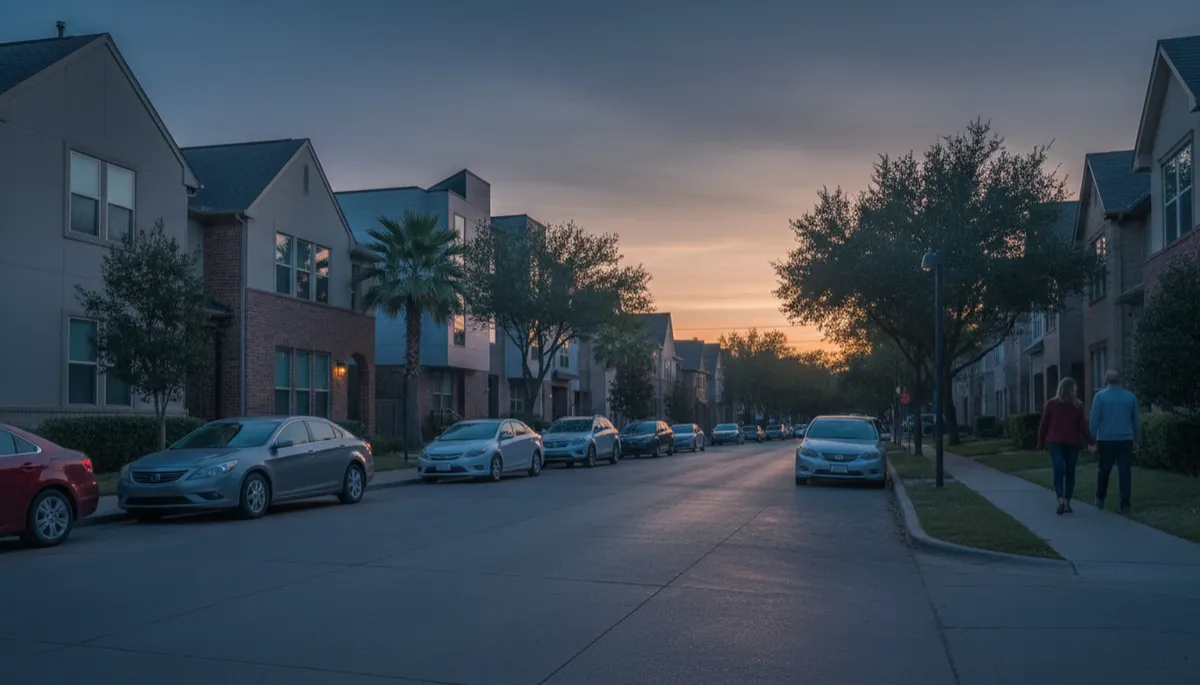
The right Dallas neighborhood can shift your payment by hundreds each month.
What a Real Payment Looks Like on a Dallas Home in 2025
Let’s put some bold, realistic numbers on the table. These are illustrative ranges, not a quote, but they will snap the picture into focus:
Purchase price: $400,000 single‑family home in the Dallas area
Down payment: 5% ($20,000) – very common for first‑time and move‑up buyers
Loan amount: about $380,000
Interest rate example: mid‑6% range (rates move, but this is a realistic 2025 ballpark)
You are easily looking at a total monthly payment in the $2,700–$3,100 range once you factor in principal and interest, property taxes, homeowners insurance, and mortgage insurance. Slide that same buyer just a few miles into a higher‑tax suburb or a higher‑HOA new construction community, and the payment can jump by several hundred dollars a month without the price tag changing much at all. That is why local tax knowledge and payment modeling are non‑negotiable if you care about your budget.
💡 Pro Tip: Before you fall in love with a house, fall in love with a monthly payment you can live with. Then build your home search around that number, not the other way around.
Utilities in Dallas: The Silent Budget Killer If You Ignore Them
Housing is only half the story. In Dallas, utilities are not optional background noise—they are a real part of your cost of living. Summer heat is brutal, and if you underestimate your electric bill, you will feel it fast. While CPI data rolls utilities into broader energy categories, the trend is clear: energy costs in 2025 ticked up around 2%, and air‑conditioning is a way of life here, not a luxury.
What Dallas Residents Actually Pay for Utilities
Numbers will vary by square footage, insulation, age of the home, and your thermostat habits, but here is a bold, realistic range for a typical household in 2025:
Electricity: Around $140–$260+ per month, with summer months often at the high end or above if you are cooling a larger home or older property.
Water, sewer, trash: Typically $70–$140 per month depending on the city, usage, and whether trash is included in HOA dues or rent.
Internet: Plan for $60–$100 per month for a standard high‑speed connection.
Put it together and a realistic utility bundle for many Dallas households lands in the $270–$450 per month range. That is on top of your rent or mortgage. Ignore this category, and you will wonder where your money is disappearing. Plan for it, and your budget suddenly feels honest instead of optimistic.
📌 Key Takeaway: When you compare homes or apartments, do not just ask, “What is the price?” Ask, “What is the average electric bill in July?” That one question separates the guessers from the planners.
Groceries in Dallas in 2025: Not a Crisis, But Not Standing Still
Food prices are where people feel inflation most directly—every single week at checkout. In Dallas, the CPI index for “food at home” (grocery spending) climbed roughly 2–3% in 2025. The Bureau of Labor Statistics reported about a 2.2% year‑over‑year increase in July 2025, and national USDA data landed in a similar zone. That does not sound explosive, but it stacks on top of several years of previous increases.
If your household spent $400 a month on groceries before, a 2–3% increase translates to roughly $8–$12 more per month by the end of the year. For a $700 grocery budget, you are looking at $14–$21 more per month. Not life‑ending—but combined with rising insurance, healthcare, and everyday costs, the pressure is real. And if you have kids, special diets, or you lean heavily on pre‑made or convenience foods, your number will sit at the high end of any “average” range.
What a Real Dallas Grocery Budget Looks Like in 2025
Here is a bold, honest look at grocery budgets I see from real people in the DFW area:
Single, budget‑conscious:$250–$400 per month if cooking at home, shopping sales, and not eating out constantly.
Couple:$450–$700 per month depending on diet, eating out, and whether you are feeding any pets or hosting often.
Family with kids:$800–$1,200+ per month is common once you add snacks, school lunches, sports, and “we are too tired to cook” nights.
Remember, CPI data shows food at home barely rising compared to dining out, which jumped more sharply. That means if you are serious about keeping Dallas affordable, how often you eat out is just as important as where you shop for groceries. The city offers everything—from warehouse clubs and discount grocers to high‑end organic markets. Your choices, not just the city itself, decide your food bill.
💡 Pro Tip: When we talk about your monthly payment for a home, we also talk about your lifestyle spending—groceries, eating out, and everyday costs. A home that forces you to slash your food budget to survive is not a smart move.
Transportation, Healthcare, and “Everything Else”: The Costs People Forget to Count
Housing, utilities, and groceries are the big three. But if you stop there, you are underestimating the true cost of living in Dallas in 2025. The city is spread out, public transit is limited, and life here is built around the car. At the same time, healthcare and insurance are quietly climbing in the background. If you are not counting these, you are not really budgeting—you are just hoping.
Transportation: Cheaper Gas, But You Will Drive More
In 2025, transportation costs in Dallas actually fell about 1% overall, and motor fuel prices were down close to 10% year over year, according to CPI data. That sounds like a win, and it is—but remember: you are likely driving more miles here than you would in a dense, transit‑heavy city. That means more wear and tear, more maintenance, and more time in the car.
Typical Dallas‑area commuters can easily drive 30–60 minutes each way depending on where they live and work.
Car insurance, registration, tolls, and maintenance add up to hundreds per month, even if gas prices ease.
When I help clients compare cities and neighborhoods, commute is not a throwaway question. It is a budget question and a lifestyle question. A cheaper house 40 minutes farther out may not be a win once you add tolls, gas, and time. A slightly higher payment in a closer‑in neighborhood can actually be the smarter financial move.
Healthcare and Insurance: The Quiet Cost Creep
Healthcare costs in Dallas ticked up about 2.3% in 2025. That is not a shock, but it is not standing still either. Health insurance premiums, copays, prescriptions, and out‑of‑pocket costs are a real part of your monthly reality, especially for families or anyone with ongoing medical needs. Add in rising homeowners or renters insurance premiums—driven by weather, claims, and rebuilding costs—and you have a category that quietly eats into your “extra” money.
📌 Key Takeaway: The cost of living is not just the mortgage or rent. It is commute, insurance, healthcare, and lifestyle. If you are not counting them, you are not getting the full truth.
How the True Cost of Living in Dallas Changes by Lifestyle
The averages are helpful, but they are not your life. Let’s walk through three bold, realistic scenarios so you can see how the same city can feel affordable to one person and overwhelming to another in 2025.
Scenario 1: Single Professional, Renting Near the City
One‑bedroom apartment near a central Dallas neighborhood: $1,500–$1,800/month
Utilities and internet: $220–$350/month
Groceries and eating out: $400–$700/month depending on habits
Transportation (car payment, insurance, gas, parking/tolls): $500–$900/month
You are now staring at a realistic monthly cost of $2,600–$3,700+ before you even touch healthcare, subscriptions, travel, or savings. That is why knowing your income, debt, and goals up front is non‑negotiable if you want to live close‑in and comfortably.
Scenario 2: Couple Buying Their First Home in the Suburbs
Starter home in a DFW suburb: $350,000–$425,000 purchase price range is common.
Monthly payment (PITI + mortgage insurance): $2,400–$3,100 depending on rate, taxes, and down payment.
Utilities and internet: $280–$420/month
Groceries: $500–$800/month
Transportation for two cars: $700–$1,300/month
You are now in the realm of $3,900–$5,600+/month in core living costs. The question is not just, “Can we qualify?” but “Can we live our actual life on what is left over?” That is the question I push my clients to answer before we write an offer.
Scenario 3: Family with Kids, Moving Up or Relocating
Larger home with good schools: $450,000–$650,000+ depending on city and district.
Monthly payment: $3,000–$4,500+ once you factor in taxes, insurance, and potential HOA dues.
Groceries and eating out: $900–$1,400/month
Utilities and internet: $320–$500/month for a larger home
Transportation, kids’ activities, and everything else: easily $1,000–$2,000+/month
Now you are looking at $5,200–$8,400+/month in realistic living costs. In this range, every decision—city, school district, new construction vs. resale, tax rate, HOA—either supports your long‑term goals or sabotages them. This is why families need more than a quick online estimate. They need a clear, numbers‑first strategy.
Where PJ Zaji Fits In: Clarity Before You Make a Move
You are not just choosing a house. You are choosing a payment, a lifestyle, a commute, a school district, and a long‑term financial path. That is why my brand, PJ Zaji, exists: to give serious DFW buyers and sellers clarity before they make a move. No pressure, no vague promises—just straight numbers, local insight, and a real strategy.
I help you understand what you can truly afford, not just what a lender might approve.
We break down your monthly payment line by line—principal, interest, taxes, insurance, HOA, utilities estimates—so there are no surprises.
We compare cities, neighborhoods, schools, and tax rates so you can see how moving just a few miles changes your budget and your lifestyle.
We look at new construction vs. resale with clear eyes—are builder incentives actually helping you, or just dressing up a higher price?
If you are selling, we talk about real value, pricing strategy, net proceeds, and your next move before you ever hit the market.
💬 Straight Answer: If a move does not make sense for you financially, I will say so. My job is not to push you into a house. My job is to protect you from costly mistakes and help you make a confident decision—whether that means buying, selling, or waiting.
The Bottom Line: Is Dallas Affordable in 2025?
Dallas in 2025 is not the cheapest big city in America, but it is also not out of reach for people who approach it with clear numbers and a real plan. Housing costs have cooled from their peak, rents are relatively stable compared to national trends, and inflation is moderate—not exploding. At the same time, half of renter households are cost‑burdened, and too many buyers are still stretching themselves thin without fully understanding the long‑term impact of their payment, taxes, and lifestyle spending.
The true cost of living in Dallas in 2025 is not just a statistic. It is your housing, utilities, groceries, transportation, healthcare, and everyday life added up—month after month, year after year. You deserve to see the full picture before you decide your next move. That is exactly what I help my clients do.
Ready to Get Clear on Your Dallas Numbers?
If you are relocating to DFW, thinking about buying your first place, eyeing a move‑up home, or debating whether to sell in this market, stop guessing. You do not need another headline. You need your numbers. You need to see how housing, utilities, groceries, and everything else play together in your budget, in your preferred areas, with your goals in mind.
That is exactly what I do as a DFW real estate agent and strategist. I combine 14 years of experience, over 1,000 transactions, local market knowledge, and mortgage insight to help you understand the numbers, the risks, and the right move—before you ever sign a contract. No pressure, no confusion, no guesswork.
👉 Call to Action:Know Your Options Before You Make a Move. If you are serious about living in Dallas—or staying here and making your next move wisely—let’s talk through your options. Start With the Numbers. Get Clear Before You Move. Schedule a Real Estate Strategy Call with PJ Zaji and see exactly what Dallas will cost you in 2025—and whether it is the right move for you.