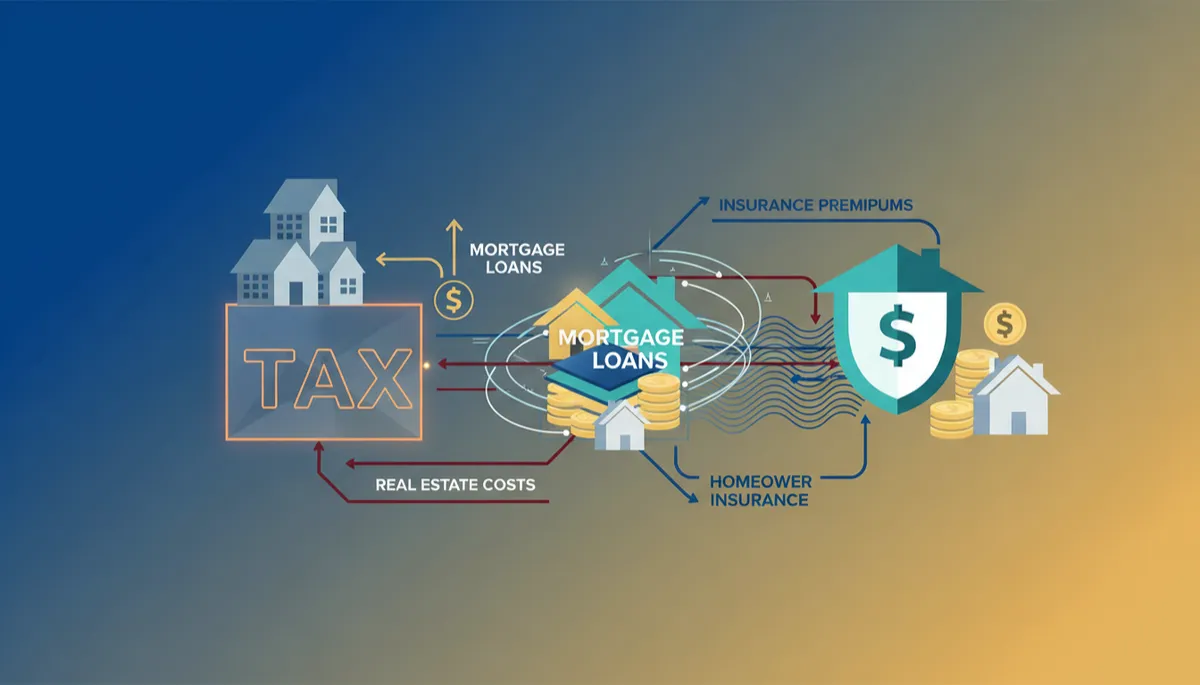
Understanding Homeownership Costs in DFW
Real Estate, Property Tax, Homeowner Insurance, Mortgage Loans
Property Tax, Homeowner Insurance, and Mortgage Loans: The Real Cost of Owning a Home in DFW
If you’re only looking at the purchase price and interest rate, you are underestimating your real monthly payment. Property Tax and Homeowner Insurance can quietly add hundreds—sometimes over a thousand—dollars to your Mortgage Loans payment every single month. In the DFW market, ignoring these Real Estate Costs is how buyers end up stretched, stressed, and stuck. This guide cuts through the noise so you actually understand what you’re signing up for before you make a move.
Your Mortgage Payment Is Lying to You (If You Ignore Taxes and Insurance)
Let’s be blunt: the “principal and interest” number your lender or online calculator shows you is only half the story. The other half is made up of Property Tax and Homeowner Insurance, and in DFW those two line items can be brutal if you don’t plan for them. When you roll everything together—principal, interest, taxes, and insurance—you get your true PITI payment, and that’s the number that either feels comfortable or keeps you awake at night.
As a real_estate_agent, I see it constantly: buyers fall in love with a house, run a quick calculation, and think, “We’re good.” Then we plug in actual local tax rates and realistic Insurance Premiums—and suddenly that “good” payment jumps by $400–$900 a month. That’s the difference between confident and cornered. PJ Zaji’s entire approach is built around one simple rule: know your real payment before you fall in love with the house.
Property Tax: The Silent Payment Multiplier in DFW
In Texas, we don’t have state income tax. That sounds great—until you see how aggressively local governments lean on Property Tax to fund schools, roads, and services. DFW buyers are often shocked by how high those Real Estate Costs run once we plug in actual tax rates for specific cities and school districts. You cannot afford to treat Property Tax as an afterthought; it is a core driver of your long-term housing cost and a major factor in your Mortgage Loans approval amount.
Different cities and school districts in DFW can have dramatically different tax rates—even on homes with the same price tag.
A “great deal” on price can be wiped out by an aggressive tax rate that inflates your monthly payment for decades.
New construction neighborhoods often start with lower assessed values, then jump sharply after a couple of years, catching unprepared owners off guard.
Here’s the hard truth: two homes with the exact same purchase price can have wildly different monthly payments because of Property Tax alone. That’s why PJ Zaji doesn’t just ask, “Do you like this house?” We ask, “Can you live with this payment once the county appraisal district catches up to market value?”
💡 Straight Answer: If you’re not looking at actual local tax rates before you write an offer, you’re guessing with your largest monthly expense. That’s not strategy—that’s gambling.
Homeowner Insurance: The Protection You Need, The Cost You Can’t Ignore
Homeowner Insurance is not optional when you have a mortgage. Your lender requires it to protect the property that secures your loan. But here’s what most buyers miss: Insurance Premiums are not fixed. They are driven by location, age of the home, roof condition, claims history, coverage level, and even storms that hit the region years ago. In other words, you can’t just plug in a random number and hope you’re close. That lazy shortcut is how you blow your budget after closing.
In DFW, hail, wind, and storm activity have a real impact on Insurance Premiums. Older roofs, outdated electrical, or previous insurance claims on the property can push those costs up even more. When you roll your Homeowner Insurance into your Mortgage Loans escrow, every extra $50–$100 per month matters. If you are a payment-conscious buyer, you cannot afford to shrug this off as “just a detail.”
Higher coverage and lower deductibles mean higher premiums—but also more protection when disaster hits.
New roofs and updated systems can lower your Insurance Premiums and sometimes offset a higher purchase price.
Some areas or property types (older homes, rural properties, large lots) can be significantly more expensive to insure.

Reviewing real Insurance Premiums early prevents payment shock after closing.
How Taxes and Insurance Shape Your Mortgage Loans Approval
Lenders don’t just look at your principal and interest when they qualify you for Mortgage Loans. They look at your full monthly housing obligation—principal, interest, Property Tax, and Homeowner Insurance. That full number is what feeds into your debt-to-income ratio (DTI). If your taxes and Insurance Premiums are higher than expected, your DTI climbs and your maximum approved price can drop fast. This is where “we thought we could afford up to $600,000” suddenly becomes “we’re capped at $525,000” once real numbers are plugged in.
Smart buyers don’t wait for the lender to surprise them. They build their budget around realistic Real Estate Costs from the beginning. That’s where PJ Zaji’s numbers-first approach makes the difference. We don’t just chase pre-approval letters; we stress-test your payment with real local tax rates and solid insurance estimates, so you know where the line actually is before you start writing offers.
💡 Strategy Over Guesswork: A home that “fits” your pre-approval but ignores true taxes and insurance doesn’t fit your life. Approval is not the same as comfort.
Real Estate Costs Are More Than Just the Price Tag
Too many buyers obsess over squeezing an extra $10,000 off the purchase price while ignoring long-term Real Estate Costs that matter far more. Here’s the reality: a slightly higher price in a lower-tax area can produce a lower monthly payment than a “cheaper” home in a high-tax district. The same goes for maintenance, HOA dues, and Insurance Premiums. Price is one piece of the puzzle; the ongoing cost of owning is where you win or lose over time.
Lower Property Tax + higher price can still equal a better monthly payment.
Better condition and newer systems can reduce Insurance Premiums and surprise repair costs.
HOA fees, MUD/PID taxes, and special assessments can quietly inflate your total Real Estate Costs if you’re not watching closely.
When PJ Zaji works with buyers, we don’t just ask, “Can you buy this house?” We ask, “Can you own this house for the next 5–10 years without resenting the payment?” That’s a very different question—and it forces us to look at Property Tax, Homeowner Insurance, and every other recurring cost with clear eyes, not wishful thinking.
Tax Implications: How Property Tax and Homeownership Affect Your Bottom Line
Let’s talk Tax Implications. No, your home is not a magic tax shelter that makes bad decisions okay. But yes, there are real tax benefits and responsibilities tied to owning. In Texas, you’re dealing primarily with Property Tax, potential homestead exemptions, and federal tax rules around mortgage interest and certain deductions. You need to understand the basics—not because you’re doing your own returns, but because these Tax Implications shape the true cost and benefit of owning versus renting or waiting.
Homestead exemptions can reduce the taxable value of your primary residence and offer some protection against huge yearly jumps.
Federal rules around itemized deductions and mortgage interest mean not every homeowner will see the same tax benefit from their Mortgage Loans interest and Property Tax payments.
When you sell, capital gains rules matter—especially if your home has appreciated significantly and you’re close to the exclusion limits.
⚠️ No-Sugarcoating Reminder: Tax laws change, and everyone’s situation is different. You need a tax professional for specific advice—but you absolutely need a real estate agent who understands how Tax Implications interact with your Real Estate Costs and Mortgage Loans strategy.
Escrow, Surprises, and Why Your Payment “Randomly” Jumps
Most lenders collect Property Tax and Homeowner Insurance through an escrow account. That means you pay a portion of your annual taxes and Insurance Premiums each month as part of your Mortgage Loans payment. When your taxes go up (and in DFW, they almost always do) or your Insurance Premiums increase, your escrow account has to adjust. That’s when you get the letter in the mail telling you your payment is going up—or that you owe a lump sum to cover a shortage. It feels random. It is not random. It is math you can and should anticipate.
Buyers who never understood their Real Estate Costs panic at that moment. Buyers who walked through the numbers with PJ Zaji may not love the increase, but they’re not blindsided by it. We talk about likely Property Tax growth, realistic Insurance Premium trends, and what it means for your payment over time. That’s the difference between being in control of your housing costs and feeling like the bank is constantly moving the goalposts on you.
Choosing the Right Area: Taxes, Insurance, and Lifestyle All at Once
DFW is not one market. It’s a patchwork of cities, suburbs, school districts, builders, and neighborhoods—each with its own mix of Property Tax rates, Homeowner Insurance risk, and Real Estate Costs. You cannot pick an area based solely on a friend’s recommendation, a pretty listing, or a commute time. You need to see how the numbers line up with your lifestyle and your comfort zone. That’s exactly where PJ Zaji leans in for serious buyers and sellers.
We compare cities and neighborhoods not just by price, but by tax rate, typical Insurance Premiums, and long-term affordability.
We look at new construction incentives with clear eyes—factoring in future Property Tax assessments and HOA or PID obligations, not just the builder’s sales pitch.
We help you balance schools, commute, amenities, and payment so you’re not trading financial stress for a slightly shorter drive.
For Sellers: Taxes, Insurance, and Your Net Proceeds
If you’re selling, you are not off the hook. Property Tax and Homeowner Insurance still shape your bottom line. Your payoff, prorated Property Tax obligations, and insurance refunds all roll into what you actually walk away with at closing. And buyers are looking at your home through the same lens—they care about your tax rate, your HOA, and the Real Estate Costs attached to your property, not just your list price. Pretending those numbers don’t matter is how you end up overpriced and overlooked.
When PJ Zaji builds a selling strategy, we calculate net proceeds, factor in Tax Implications, and help you plan your next move with real numbers, not guesses. You’ll know what you can actually put down on your next home, what your next Mortgage Loans payment is likely to be, and how your current Property Tax and insurance situation will transition as you move. That clarity is non-negotiable if you’re buying and selling at the same time.
How PJ Zaji Helps You Take Control of the Numbers
My brand exists for one reason: to give DFW buyers and sellers clarity before they make a move. That means we do not gloss over Property Tax, Homeowner Insurance, Insurance Premiums, or Tax Implications. We put them front and center, right alongside purchase price, interest rate, and closing costs. You get straight answers, clear numbers, and a real strategy instead of vague reassurances and sales pressure.
We break down your full monthly payment—principal, interest, Property Tax, Homeowner Insurance, HOA, and more—before you write an offer.
We compare different areas and property types by total Real Estate Costs, not just list price, so you see which move actually makes sense.
We coordinate with lenders and, when needed, tax and insurance pros to make sure your Mortgage Loans strategy matches your real life, not a spreadsheet fantasy.
Know Your Numbers. Know Your Options. That’s the core of how PJ Zaji helps DFW buyers and sellers move with confidence instead of crossing their fingers and hoping the payment works out.
Your Next Step: Get Clear Before You Move
If you’re serious about buying or selling in DFW, you cannot afford to ignore Property Tax, Homeowner Insurance, Insurance Premiums, or the Tax Implications tied to your Mortgage Loans. These are not side notes. They are the backbone of your real monthly payment and your long-term financial comfort. You deserve more than generic advice and online calculators that leave out half the story.
PJ Zaji combines 14 years of experience, over 1,000 transactions, and deep local market knowledge with real mortgage insight. That means you are never left wondering, “What’s this going to cost me for real?” You’ll know. You’ll see the numbers. You’ll understand the tradeoffs. And you’ll make your move with your eyes wide open, not under pressure and not in the dark.
Ready to stop guessing? Talk through your options, see what you can truly afford, and build a strategy that respects your budget and your life. Know Your Options Before You Make a Move.Start With the Numbers.Schedule a Real Estate Strategy Call with PJ Zaji and get the clarity you’ve been missing.